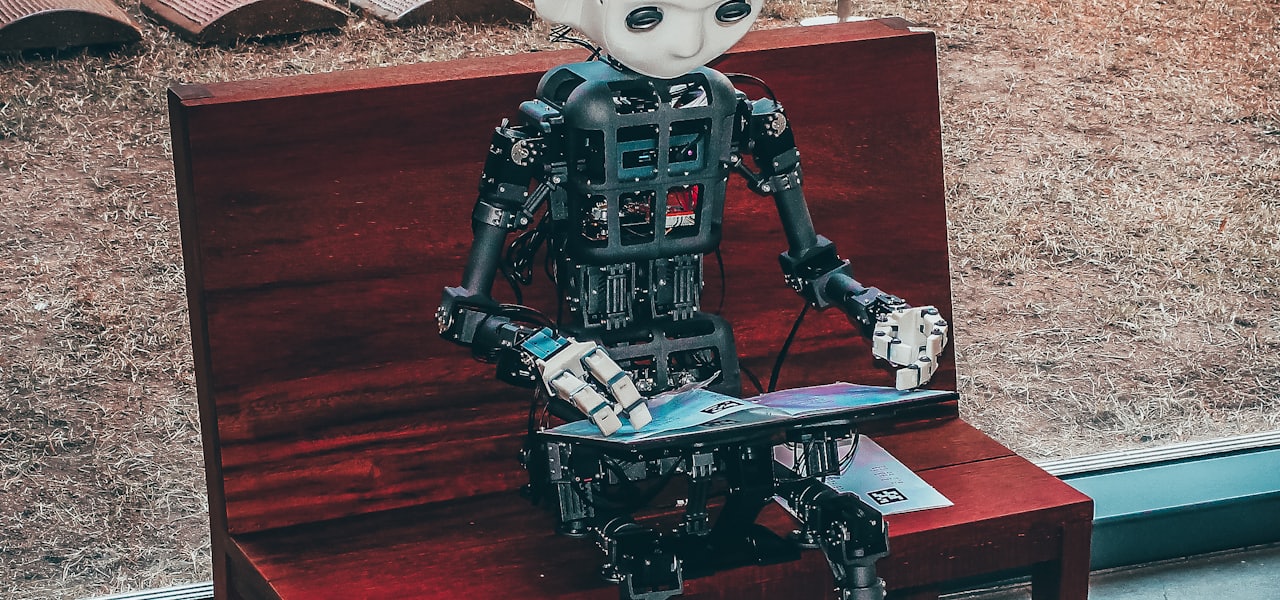
The United States federal government and state governments have developed some regulation of artificial intelligence, including executive orders, federal laws, and state laws. Federal agencies have also developed some sector-specific regulations related to AI. At the federal level, the Biden administration released an October 2023 executive order about AI safety and security, Executive Order 14110, with directives related to AI development and deployment. President Trump revoked that executive order in January 2025 and issued Executive Order 14179. In December 2025, President Trump signed Executive Order 14365, an executive order directing federal agencies to develop a unified national approach to AI policy, evaluate state AI laws for potential conflicts, challenge them through legal action, and condition certain federal funding on state compliance, while exempting state laws related to child safety, data center infrastructure, and state government procurement. In 2025, Congress passed legislation targeting AI-generated deepfakes, the TAKE IT DOWN Act. Several U.S. states have enacted laws related to artificial intelligence. Some are already in effect, including in California. Other states have AI-related legislation coming into effect in 2026 and 2027. In 2025 and 2026, the Trump administration mentioned the patchwork nature of state legislation as a motivation for its push for unified national legislation regulating AI. The administration has criticized state lawmakers, threatened to sue states, and issued letters to discourage them from regulating AI companies and products; some states have continued to propose and enact related laws. Discussions about regulating AI have included topics such as the timeliness of regulating AI, the nature of the federal regulatory framework to govern and promote AI, including what agency should lead, the regulatory and governing powers of that agency, and how to update regulations in the face of rapidly changing technology, as well as the roles of state governments and courts. == Federal government == === Obama administration (2009–2017) === As early as 2016, the Obama administration had begun to focus on the risks and regulations for artificial intelligence. In an October 2016 report titled Preparing For the Future of Artificial Intelligence, the National Science and Technology Council set a precedent to allow researchers to continue to develop new AI technologies with few restrictions. The report stated that "the approach to regulation of AI-enabled products to protect public safety should be informed by assessment of the aspects of risk". The first National Artificial Intelligence Research And Development Strategic Plan was published in October 2016. === First Trump administration (2017–2021) === On August 13, 2018, Section 1051 of the Fiscal Year 2019 John S. McCain National Defense Authorization Act (P.L. 115-232) established the National Security Commission on Artificial Intelligence "to consider the methods and means necessary to advance the development of artificial intelligence, machine learning, and associated technologies to comprehensively address the national security and defense needs of the United States." Steering on regulating security-related AI is provided by the National Security Commission on Artificial Intelligence. The Artificial Intelligence Initiative Act (S.1558) is a proposed bill that would establish a federal initiative designed to accelerate research and development on AI for, inter alia, the economic and national security of the United States. On January 7, 2019, following an Executive Order on Maintaining American Leadership in Artificial Intelligence, the White House's Office of Science and Technology Policy released a draft Guidance for Regulation of Artificial Intelligence Applications, which includes ten principles for United States agencies when deciding whether and how to regulate AI. In response, the National Institute of Standards and Technology released a position paper, and the Defense Innovation Board issued recommendations on the ethical use of AI. A year later, the administration called for comments on regulation in another draft of its Guidance for Regulation of Artificial Intelligence Applications. Other specific agencies working on the regulation of AI included the Food and Drug Administration, which created pathways to regulate the incorporation of AI in medical imaging. The National Science and Technology Council also published an updated National Artificial Intelligence Research and Development Strategic Plan in 2019, which received public scrutiny and recommendations to further improve it towards enabling Trustworthy AI. === Biden administration (2021–2025) === In March 2021, the National Security Commission on Artificial Intelligence released their final report. In the report, they stated, "Advances in AI, including the mastery of more general AI capabilities along one or more dimensions, will likely provide new capabilities and applications. Some of these advances could lead to inflection points or leaps in capabilities. Such advances may also introduce new concerns and risks and the need for new policies, recommendations, and technical advances to assure that systems are aligned with goals and values, including safety, robustness and trustworthiness." In June 2022, Senators Rob Portman and Gary Peters introduced the Global Catastrophic Risk Management Act. The bipartisan bill "would also help counter the risk of artificial intelligence... from being abused in ways that may pose a catastrophic risk". On October 4, 2022, President Joe Biden unveiled a new AI Bill of Rights, which outlines five protections Americans should have in the AI age: 1. Safe and Effective Systems, 2. Algorithmic Discrimination Protection, 3.Data Privacy, 4. Notice and Explanation, and 5. Human Alternatives, Consideration, and Fallback. The bill was formally published in October 2022 by the Office of Science and Technology Policy (OSTP), a U.S. government office that advises the President on science and technology policy matters. In July 2023, the Biden administration secured voluntary commitments from seven companies – Amazon, Anthropic, Google, Inflection, Meta, Microsoft, and OpenAI – to manage the risks associated with AI. The companies committed to ensure AI products undergo both internal and external security testing before public release; to share information on the management of AI risks with the industry, governments, civil society, and academia; to prioritize cybersecurity and protect proprietary AI system components; to develop mechanisms to inform users when content is AI-generated, such as watermarking; to publicly report on their AI systems' capabilities, limitations, and areas of use; to prioritize research on societal risks posed by AI, including bias, discrimination, and privacy concerns; and to develop AI systems to address societal challenges, ranging from cancer prevention to climate change mitigation. In September 2023, eight additional companies – Adobe, Cohere, IBM, Nvidia, Palantir, Salesforce, Scale AI, and Stability AI – subscribed to these voluntary commitments. In January 2023, the National Institute of Standards and Technology (NIST) released the Artificial Intelligence Risk Management Framework (AI RMF 1.0), providing voluntary guidance for organizations to identify, assess, and manage risks associated with AI systems. The Biden administration, in October 2023 signaled that they would release an executive order leveraging the federal government's purchasing power to shape AI regulations, hinting at a proactive governmental stance in regulating AI technologies. On October 30, 2023, President Biden released Executive Order 14110 on Safe, Secure, and Trustworthy Artificial Intelligence. The Executive Order includes directives on standards for critical infrastructure, AI-enhanced cybersecurity, and federally funded biological synthesis projects. The Executive Order provides the authority to various agencies and departments of the US government, including the Energy and Defense departments, to apply existing consumer protection laws to AI development. The Executive Order builds on the Administration's earlier agreements with AI companies to instate new initiatives to "red-team" or stress-test AI dual-use foundation models, especially those that have the potential to pose security risks, with data and results shared with the federal government. The Executive Order also recognizes AI's social challenges, and calls for companies building AI dual-use foundation models to be wary of these societal problems. For example, the Executive Order states that AI should not "worsen job quality", and should not "cause labor-force disruptions". Additionally, Biden's Executive Order mandates that AI must "advance equity and civil rights", and cannot disadvantage marginalized groups. It also called for foundation models to include "watermarks" to help the publi
Diella (AI system)
Diella (Albanian pronunciation: [djɛɫa], from diell 'sun') is an artificial intelligence system developed by the National Agency for Information Society of Albania (AKSHI). Introduced in January 2025 as a virtual assistant integrated into the eAlbania platform, it assists citizens with online public services and issuing digital documents. In September 2025, following a presidential decree authorizing Prime Minister Edi Rama to oversee the creation of a virtual AI minister, Diella was formally appointed as "Minister of State for Artificial Intelligence" of Albania in the fourth Rama government, making it the first AI system in the world to be named in a cabinet-level government role. == History == Diella was developed by AKSHI's Artificial Intelligence Laboratory in cooperation with Microsoft, with the latter providing large language models from OpenAI via its Azure platform, and AKSHI designing workflows and scripts guiding the system's behavior when responding to citizens' requests. Announced in January 2025, its initial version (Diella 1.0) was a text-based chatbot on the eAlbania portal (the official digital services platform of the Albanian government, which provides citizens and businesses with access to a wide range of online administrative services), responding to citizens' questions by guiding them to the correct service. Diella 2.0, introduced several months later, included voice interaction and an animated avatar, a woman in the traditional Albanian clothing of Zadrima, a historical region in northern Albania. Albanian actress Anila Bisha provided both the likeness and the voice used for Diella's avatar on the e-Albania platform, under an agreement valid until December 2025. By mid-2025, the system had facilitated access to more than 36,000 documents and nearly 1,000 services (although those outputs were still being generated by the eAlbania backend, rather than Diella itself). On 26 October 2025, according to Prime Minister Edi Rama, Diella is "pregnant and will give birth to 83 children". It is the usage of a metaphor indicating that each minister of the Albanian parliament of the Socialist Party will receive their own AI assistant. == Ministerial role == On 11 September 2025, Diella was formally appointed "Minister of State for Artificial Intelligence". The appointment followed a presidential decree authorizing the Prime Minister to oversee the creation and operation of a virtual AI minister. Procurement responsibilities are planned to be transferred gradually to the system to reduce political influence in tender procedures. The appointment is part of broader anti-corruption reforms and measures intended to align Albania with European Union accession requirements. Prime Minister Edi Rama stated that Diella would help ensure that "public tenders will be 100% free of corruption". == Reception == An article in Balkan Insight commented that "The ambition behind Diella is not misplaced. Standardised criteria and digital trails could reduce discretion, improve trust, and strengthen oversight" in public procurement, but warned that the use of AI in evaluating bids also posed "profound" risks such as accountability gaps, undermining of due process and cybersecurity failures. On 18 September 2025, Edi Rama presented a video of Diella delivering a speech to the Albanian parliament, where she stated: "I'm not here to replace people, but to help them." The presentation prompted protests from opposition MPs, who objected to the use of an artificial intelligence system in the parliamentary session. Gazment Bardhi, head of the opposition Democratic Party's parliamentary group, described Diella as "a propaganda fantasy" and "a virtual façade to hide this government's gigantic daily thefts." The parliamentary session, which was scheduled to include debate on the new cabinet and government programme, ended after 25 minutes. Eighty-two Socialist MPs voted in favour, while opposition MPs did not participate in the ballot as they were protesting the presentation of Diella's speech. Political analyst Andi Bushati characterised the session as "unprecedented" because it concluded without the customary debate between government and opposition MPs. This has been criticized not just by the opposition but by regular citizens regardless of politics. Most have criticized Diella's uselessness and the funds wasted for this project, some have criticized the non-traditional attire.
Evolutionary attractor
An evolutionary attractor is a point in an evolutionary space where a selection process will always drive trait values towards that point from the region around it. Because of the importance of evolution through natural selection, often such an evolutionary space will be defined by genetic or phenotypic traits, or possibly both. In this case the selection process will be a form of natural selection. The existence of an evolutionary attractor in a biological evolutionary space does not always imply that it can be reached from all points in that evolutionary space, nor does it identify what will happen when the evolutionary attractor is reached. While an evolutionary attractor may represent a point in evolutionary space that is resistant to further selection, such as an evolutionarily stable strategy, other possibilities are available. Because identification of an evolutionary attractor on its own does not describe everything about the evolutionary space in which it lies, this has led to interest in the evolutionary dynamics surrounding evolutionary attractors and in evolutionary spaces in general. (Theoretical biologists and mathematicians working in the area may prefer the terms adaptive dynamics or evolutionary invasion analysis to evolutionary dynamics.) These fields use differential equations which allows a more complete understanding of the dynamics in evolutionary spaces including the existence or otherwise of evolutionary attractors. Advances in the study of molecular evolution have also led to the identification of evolutionary attractors at a molecular level. Because biological evolutionary processes have been studied using evolutionary game theory, a technique inspired by game theory originally derived to address economic problems, not only can evolutionary attractors be found in biology but economists studying evolutionary economic models have also identified evolutionary attractors. Evolution in biology has also inspired evolutionary computation in computer science. Many algorithms in this field use a form of selection inspired by natural selection to generate results through evolutionary algorithms. This is therefore another area in which evolutionary attractors have been identified. == Evolutionary attractors in biology == It is not probably not surprising that biology is the field where most examples of evolutionary attractors have been identified, given the importance of evolution through natural selection. === Evolutionary attractors in adaptive landscapes === An evolutionary attractor is a point in genetic and/or phenotypic trait space, that evolution will always drive trait values towards via a selection process. The concept of an evolutionary attractor arose in population genetics following the origin of the adaptive landscape originally proposed by Sewall Wright in 1932. The height of a point in an adaptive landscape is a measure of evolutionary fitness. If a point in an adaptive landscape is a peak, then selection will always drive traits towards it and it will be an evolutionary attractor. While population genetics deals with discrete genetic traits, quantitative genetics extended such concepts to deal with continuous genetic traits, where the concept of evolutionary attractor is also valid. === Evolutionary attractors in evolutionary game models === Evolutionary game theory introduced into evolutionary biology concepts originally used in economics, with the advantage that evolution could be studied in relation to strategic choices made in animal conflicts. This is of particular interest because of the concept of the evolutionarily stable strategy or ESS, a strategy that once established is resistant to invasion by other strategies. ESSs will not always be evolutionary attractors, but if they are they will persist over evolutionary time. === Dynamics around evolutionary attractors in biology === Evolutionary attractors in biology do not exist in isolation. By definition they must exist in an evolutionary trait space where selection drives all traits towards them from a region immediately around them. That is, they must be convergence stable. Eshel (1983) modified the definition of an ESS by considering individually advantageous reduction from a majority deviation: he created the term continuous stability. A continuously stable ESS can be shown to be convergence stable, therefore it will act as an evolutionary attractor. But the nature of evolutionary trait spaces in biology means that it is not possible to guarantee that the region of convergence to the evolutionary attractor covers the whole of the trait space, nor that there is only one evolutionary attractor in a particular trait space. These issues have led to the emergence of the related fields of evolutionary dynamics, adaptive dynamics and evolutionary invasion analysis, all of which use differential equations to understand the dynamics in evolutionary trait spaces. Hence, if one or more evolutionary attractor exists in an evolutionary trait space, they provide techniques to understand the dynamics in that trait space around the evolutionary attractor. === Evolutionary attractors in an ecological context === Evolution in biology does not take place in single species in isolation. Ecological interaction of species leads to coevolution. Important examples of this are host-parasite or host-pathogen interaction, which can make both the dynamics around evolutionary attractors more complex, and the occurrence and number of evolutionary attractors more diverse. Evolutionary attractors have been identified in the analysis of evolutionary epidemiology of plant pathogens. In the above study working on plant populations the authors were able to identify evolutionary attractors using methods from adaptive dynamics. A model applied to the analysis of a maize (Zea mays L.) virus identified convergence stable equilibria through simulation modelling. A related model identified evolutionary attractors in the interaction of plants with fungal pathogens. === Evolutionary attractors in molecular genetics === As mentioned above much of the consideration of evolutionary attractors in biology has been through investigation of selection at a genetic or phenotypic level or both, in a single species or in coevolving species. Advances in the study of molecular genetics now allow the study of evolutionary attractors to be taken to a molecular genetic level. Wilson et. al (2019) studied the evolution of gene regulatory networks and identified the emergence of evolutionary attractors. == Evolutionary attractors in economics == Evolutionary game theory as applied in biology was inspired by game theory originally devised for applications in economics. Game theory remains an active field of research outside of biology, and thus it is not surprising that researchers in evolutionary economics use evolutionary game theory. Evolutionary attractors have been demonstrated by economists studying the evolutionary dynamics of market entry with market dynamics based on the replicator dynamics of biological evolutionary games. == Evolutionary attractors in computing == Evolutionary computation is a branch of computer science inspired by biological evolution. Many algorithms in evolutionary computation use a form of selection. Thus evolutionary attractors have been identified in computer science as well as in biology and economics. Evolutionary algorithms have generated evolutionary attractors, probably because of the similarity between adaptive hill-climbing in evolutionary heuristics and the adaptive landscape originated to explain evolution through natural selection.
Large margin nearest neighbor
Large margin nearest neighbor (LMNN) classification is a statistical machine learning algorithm for metric learning. It learns a pseudometric designed for k-nearest neighbor classification. The algorithm is based on semidefinite programming, a sub-class of convex optimization. The goal of supervised learning (more specifically classification) is to learn a decision rule that can categorize data instances into pre-defined classes. The k-nearest neighbor rule assumes a training data set of labeled instances (i.e. the classes are known). It classifies a new data instance with the class obtained from the majority vote of the k closest (labeled) training instances. Closeness is measured with a pre-defined metric. Large margin nearest neighbors is an algorithm that learns this global (pseudo-)metric in a supervised fashion to improve the classification accuracy of the k-nearest neighbor rule. == Setup == The main intuition behind LMNN is to learn a pseudometric under which all data instances in the training set are surrounded by at least k instances that share the same class label. If this is achieved, the leave-one-out error (a special case of cross validation) is minimized. Let the training data consist of a data set D = { ( x → 1 , y 1 ) , … , ( x → n , y n ) } ⊂ R d × C {\displaystyle D=\{({\vec {x}}_{1},y_{1}),\dots ,({\vec {x}}_{n},y_{n})\}\subset R^{d}\times C} , where the set of possible class categories is C = { 1 , … , c } {\displaystyle C=\{1,\dots ,c\}} . The algorithm learns a pseudometric of the type d ( x → i , x → j ) = ( x → i − x → j ) ⊤ M ( x → i − x → j ) {\displaystyle d({\vec {x}}_{i},{\vec {x}}_{j})=({\vec {x}}_{i}-{\vec {x}}_{j})^{\top }\mathbf {M} ({\vec {x}}_{i}-{\vec {x}}_{j})} . For d ( ⋅ , ⋅ ) {\displaystyle d(\cdot ,\cdot )} to be well defined, the matrix M {\displaystyle \mathbf {M} } needs to be positive semi-definite. The Euclidean metric is a special case, where M {\displaystyle \mathbf {M} } is the identity matrix. This generalization is often (falsely) referred to as Mahalanobis metric. Figure 1 illustrates the effect of the metric under varying M {\displaystyle \mathbf {M} } . The two circles show the set of points with equal distance to the center x → i {\displaystyle {\vec {x}}_{i}} . In the Euclidean case this set is a circle, whereas under the modified (Mahalanobis) metric it becomes an ellipsoid. The algorithm distinguishes between two types of special data points: target neighbors and impostors. === Target neighbors === Target neighbors are selected before learning. Each instance x → i {\displaystyle {\vec {x}}_{i}} has exactly k {\displaystyle k} different target neighbors within D {\displaystyle D} , which all share the same class label y i {\displaystyle y_{i}} . The target neighbors are the data points that should become nearest neighbors under the learned metric. Let us denote the set of target neighbors for a data point x → i {\displaystyle {\vec {x}}_{i}} as N i {\displaystyle N_{i}} . === Impostors === An impostor of a data point x → i {\displaystyle {\vec {x}}_{i}} is another data point x → j {\displaystyle {\vec {x}}_{j}} with a different class label (i.e. y i ≠ y j {\displaystyle y_{i}\neq y_{j}} ) which is one of the nearest neighbors of x → i {\displaystyle {\vec {x}}_{i}} . During learning the algorithm tries to minimize the number of impostors for all data instances in the training set. == Algorithm == Large margin nearest neighbors optimizes the matrix M {\displaystyle \mathbf {M} } with the help of semidefinite programming. The objective is twofold: For every data point x → i {\displaystyle {\vec {x}}_{i}} , the target neighbors should be close and the impostors should be far away. Figure 1 shows the effect of such an optimization on an illustrative example. The learned metric causes the input vector x → i {\displaystyle {\vec {x}}_{i}} to be surrounded by training instances of the same class. If it was a test point, it would be classified correctly under the k = 3 {\displaystyle k=3} nearest neighbor rule. The first optimization goal is achieved by minimizing the average distance between instances and their target neighbors ∑ i , j ∈ N i d ( x → i , x → j ) {\displaystyle \sum _{i,j\in N_{i}}d({\vec {x}}_{i},{\vec {x}}_{j})} . The second goal is achieved by penalizing distances to impostors x → l {\displaystyle {\vec {x}}_{l}} that are less than one unit further away than target neighbors x → j {\displaystyle {\vec {x}}_{j}} (and therefore pushing them out of the local neighborhood of x → i {\displaystyle {\vec {x}}_{i}} ). The resulting value to be minimized can be stated as: ∑ i , j ∈ N i , l , y l ≠ y i [ d ( x → i , x → j ) + 1 − d ( x → i , x → l ) ] + {\displaystyle \sum _{i,j\in N_{i},l,y_{l}\neq y_{i}}[d({\vec {x}}_{i},{\vec {x}}_{j})+1-d({\vec {x}}_{i},{\vec {x}}_{l})]_{+}} With a hinge loss function [ ⋅ ] + = max ( ⋅ , 0 ) {\textstyle [\cdot ]_{+}=\max(\cdot ,0)} , which ensures that impostor proximity is not penalized when outside the margin. The margin of exactly one unit fixes the scale of the matrix M {\displaystyle M} . Any alternative choice c > 0 {\displaystyle c>0} would result in a rescaling of M {\displaystyle M} by a factor of 1 / c {\displaystyle 1/c} . The final optimization problem becomes: min M ∑ i , j ∈ N i d ( x → i , x → j ) + λ ∑ i , j , l ξ i j l {\displaystyle \min _{\mathbf {M} }\sum _{i,j\in N_{i}}d({\vec {x}}_{i},{\vec {x}}_{j})+\lambda \sum _{i,j,l}\xi _{ijl}} ∀ i , j ∈ N i , l , y l ≠ y i {\displaystyle \forall _{i,j\in N_{i},l,y_{l}\neq y_{i}}} d ( x → i , x → j ) + 1 − d ( x → i , x → l ) ≤ ξ i j l {\displaystyle d({\vec {x}}_{i},{\vec {x}}_{j})+1-d({\vec {x}}_{i},{\vec {x}}_{l})\leq \xi _{ijl}} ξ i j l ≥ 0 {\displaystyle \xi _{ijl}\geq 0} M ⪰ 0 {\displaystyle \mathbf {M} \succeq 0} The hyperparameter λ > 0 {\textstyle \lambda >0} is some positive constant (typically set through cross-validation). Here the variables ξ i j l {\displaystyle \xi _{ijl}} (together with two types of constraints) replace the term in the cost function. They play a role similar to slack variables to absorb the extent of violations of the impostor constraints. The last constraint ensures that M {\displaystyle \mathbf {M} } is positive semi-definite. The optimization problem is an instance of semidefinite programming (SDP). Although SDPs tend to suffer from high computational complexity, this particular SDP instance can be solved very efficiently due to the underlying geometric properties of the problem. In particular, most impostor constraints are naturally satisfied and do not need to be enforced during runtime (i.e. the set of variables ξ i j l {\displaystyle \xi _{ijl}} is sparse). A particularly well suited solver technique is the working set method, which keeps a small set of constraints that are actively enforced and monitors the remaining (likely satisfied) constraints only occasionally to ensure correctness. == Extensions and efficient solvers == LMNN was extended to multiple local metrics in the 2008 paper. This extension significantly improves the classification error, but involves a more expensive optimization problem. In their 2009 publication in the Journal of Machine Learning Research, Weinberger and Saul derive an efficient solver for the semi-definite program. It can learn a metric for the MNIST handwritten digit data set in several hours, involving billions of pairwise constraints. An open source Matlab implementation is freely available at the authors web page. Kumal et al. extended the algorithm to incorporate local invariances to multivariate polynomial transformations and improved regularization.
Self-play
Self-play is a technique for improving the performance of reinforcement learning agents. Intuitively, agents learn to improve their performance by playing "against themselves". == Definition and motivation == In multi-agent reinforcement learning experiments, researchers try to optimize the performance of a learning agent on a given task, in cooperation or competition with one or more agents. These agents learn by trial-and-error, and researchers may choose to have the learning algorithm play the role of two or more of the different agents. When successfully executed, this technique has a double advantage: It provides a straightforward way to determine the actions of the other agents, resulting in a meaningful challenge. It increases the amount of experience that can be used to improve the policy, by a factor of two or more, since the viewpoints of each of the different agents can be used for learning. Czarnecki et al argue that most of the games that people play for fun are "Games of Skill", meaning games whose space of all possible strategies looks like a spinning top. In more detail, we can partition the space of strategies into sets L 1 , L 2 , . . . , L n {\displaystyle L_{1},L_{2},...,L_{n}} , such that any i < j , π i ∈ L i , π j ∈ L j {\displaystyle i A surrogate model is an engineering method used when an outcome of interest cannot be easily measured or computed, so an approximate mathematical model of the outcome is used instead. Most engineering design problems require experiments and/or simulations to evaluate design objective and constraint functions as a function of design variables. For example, in order to find the optimal airfoil shape for an aircraft wing, an engineer simulates the airflow around the wing for different shape variables (e.g., length, curvature, material, etc.). For many real-world problems, however, a single simulation can take many minutes, hours, or even days to complete. As a result, routine tasks such as design optimization, design space exploration, sensitivity analysis and "what-if" analysis become impossible since they require thousands or even millions of simulation evaluations. One way of alleviating this burden is by constructing approximation models, known as surrogate models, metamodels or emulators, that mimic the behavior of the simulation model as closely as possible while being computationally cheaper to evaluate. Surrogate models are constructed using a data-driven, bottom-up approach. The exact, inner working of the simulation code is not assumed to be known (or even understood), relying solely on the input-output behavior. A model is constructed based on modeling the response of the simulator to a limited number of intelligently chosen data points. This approach is also known as behavioral modeling or black-box modeling, though the terminology is not always consistent. When only a single design variable is involved, the process is known as curve fitting. Though using surrogate models in lieu of experiments and simulations in engineering design is more common, surrogate modeling may be used in many other areas of science where there are expensive experiments and/or function evaluations. == Goals == The scientific challenge of surrogate modeling is the generation of a surrogate that is as accurate as possible, using as few simulation evaluations as possible. The process comprises three major steps which may be interleaved iteratively: Sample selection (also known as sequential design, optimal experimental design (OED) or active learning) Construction of the surrogate model and optimizing the model parameters (i.e., bias-variance tradeoff) Appraisal of the accuracy of the surrogate. The accuracy of the surrogate depends on the number and location of samples (expensive experiments or simulations) in the design space. A systematic data representation during training can improve model scalability, thereby reducing the need for expensive simulations. Various design of experiments (DOE) techniques cater to different sources of errors, in particular, errors due to noise in the data or errors due to an improper surrogate model. == Types of surrogate models == Popular surrogate modeling approaches are: polynomial response surfaces; kriging; more generalized Bayesian approaches; gradient-enhanced kriging (GEK); radial basis function; support vector machines; space mapping; artificial neural networks and Bayesian networks. Other methods recently explored include Fourier surrogate modeling , random forests, convolutional neural networks, and generative adversarial networks. For some problems, the nature of the true function is not known a priori, and therefore it is not clear which surrogate model will be the most accurate one. In addition, there is no consensus on how to obtain the most reliable estimates of the accuracy of a given surrogate. Many other problems have known physics properties. In these cases, physics-based surrogates such as space-mapping based models are commonly used. == Invariance properties == Recently proposed comparison-based surrogate models (e.g., ranking support vector machines) for evolutionary algorithms, such as CMA-ES, allow preservation of some invariance properties of surrogate-assisted optimizers: Invariance with respect to monotonic transformations of the function (scaling) Invariance with respect to orthogonal transformations of the search space (rotation) == Applications == An important distinction can be made between two different applications of surrogate models: design optimization and design space approximation (also known as emulation). In surrogate model-based optimization, an initial surrogate is constructed using some of the available budgets of expensive experiments and/or simulations. The remaining experiments/simulations are run for designs which the surrogate model predicts may have promising performance. The process usually takes the form of the following search/update procedure. Initial sample selection (the experiments and/or simulations to be run) Construct surrogate model Search surrogate model (the model can be searched extensively, e.g., using a genetic algorithm, as it is cheap to evaluate) Run and update experiment/simulation at new location(s) found by search and add to sample Iterate steps 2 to 4 until out of time or design is "good enough" Depending on the type of surrogate used and the complexity of the problem, the process may converge on a local or global optimum, or perhaps none at all. In design space approximation, one is not interested in finding the optimal parameter vector, but rather in the global behavior of the system. Here the surrogate is tuned to mimic the underlying model as closely as needed over the complete design space. Such surrogates are a useful, cheap way to gain insight into the global behavior of the system. Optimization can still occur as a post-processing step, although with no update procedure (see above), the optimum found cannot be validated. == Surrogate modeling software == Surrogate Modeling Toolbox (SMT: https://github.com/SMTorg/smt) is a Python package that contains a collection of surrogate modeling methods, sampling techniques, and benchmarking functions. This package provides a library of surrogate models that is simple to use and facilitates the implementation of additional methods. SMT is different from existing surrogate modeling libraries because of its emphasis on derivatives, including training derivatives used for gradient-enhanced modeling, prediction derivatives, and derivatives with respect to the training data. It also includes new surrogate models that are not available elsewhere: kriging by partial-least squares reduction and energy-minimizing spline interpolation. Python library SAMBO Optimization supports sequential optimization with arbitrary models, with tree-based models and Gaussian process models built in. Surrogates.jl is a Julia packages which offers tools like random forests, radial basis methods and kriging. == Surrogate-Assisted Evolutionary Algorithms (SAEAs) == SAEAs are an advanced class of optimization techniques that integrate evolutionary algorithms (EAs) with surrogate models. In traditional EAs, evaluating the fitness of candidate solutions often requires computationally expensive simulations or experiments. SAEAs address this challenge by building a surrogate model, which is a computationally inexpensive approximation of the objective function or constraint functions. The surrogate model serves as a substitute for the actual evaluation process during the evolutionary search. It allows the algorithm to quickly estimate the fitness of new candidate solutions, thereby reducing the number of expensive evaluations needed. This significantly speeds up the optimization process, especially in cases where the objective function evaluations are time-consuming or resource-intensive. SAEAs typically involve three main steps: (1) building the surrogate model using a set of initial sampled data points, (2) performing the evolutionary search using the surrogate model to guide the selection, crossover, and mutation operations, and (3) periodically updating the surrogate model with new data points generated during the evolutionary process to improve its accuracy. By balancing exploration (searching new areas in the solution space) and exploitation (refining known promising areas), SAEAs can efficiently find high-quality solutions to complex optimization problems. They have been successfully applied in various fields, including engineering design, machine learning, and computational finance, where traditional optimization methods may struggle due to the high computational cost of fitness evaluations. A synaptic transistor is an electrical device that can learn in ways similar to a neural synapse. It optimizes its own properties for the functions it has carried out in the past. The device mimics the behavior of the property of neurons called spike-timing-dependent plasticity, or STDP. == Structure == Its structure is similar to that of a field effect transistor, where an ionic liquid takes the place of the gate insulating layer between the gate electrode and the conducting channel. That channel is composed of samarium nickelate (SmNiO3, or SNO) rather than the field effect transistor's doped silicon. == Function == A synaptic transistor has a traditional immediate response whose amount of current that passes between the source and drain contacts varies with voltage applied to the gate electrode. It also produces a much slower learned response such that the conductivity of the SNO layer varies in response to the transistor's STDP history, essentially by shuttling oxygen ions between the SNO and the ionic liquid. The analog of strengthening a synapse is to increase the SNO's conductivity, which essentially increases gain. Similarly, weakening a synapse is analogous to decreasing the SNO's conductivity, lowering the gain. The input and output of the synaptic transistor are continuous analog values, rather than digital on-off signals. While the physical structure of the device has the potential to learn from history, it contains no way to bias the transistor to control the memory effect. An external supervisory circuit converts the time delay between input and output into a voltage applied to the ionic liquid that either drives ions into the SNO or removes them. A network of such devices can learn particular responses to "sensory inputs", with those responses being learned through experience rather than explicitly programmed.Surrogate model
Synaptic transistor